Retro Goal
- 4.0
- Rating
- 1.00M
- Installs
- Free
- Price

 Analysis by App-foxy
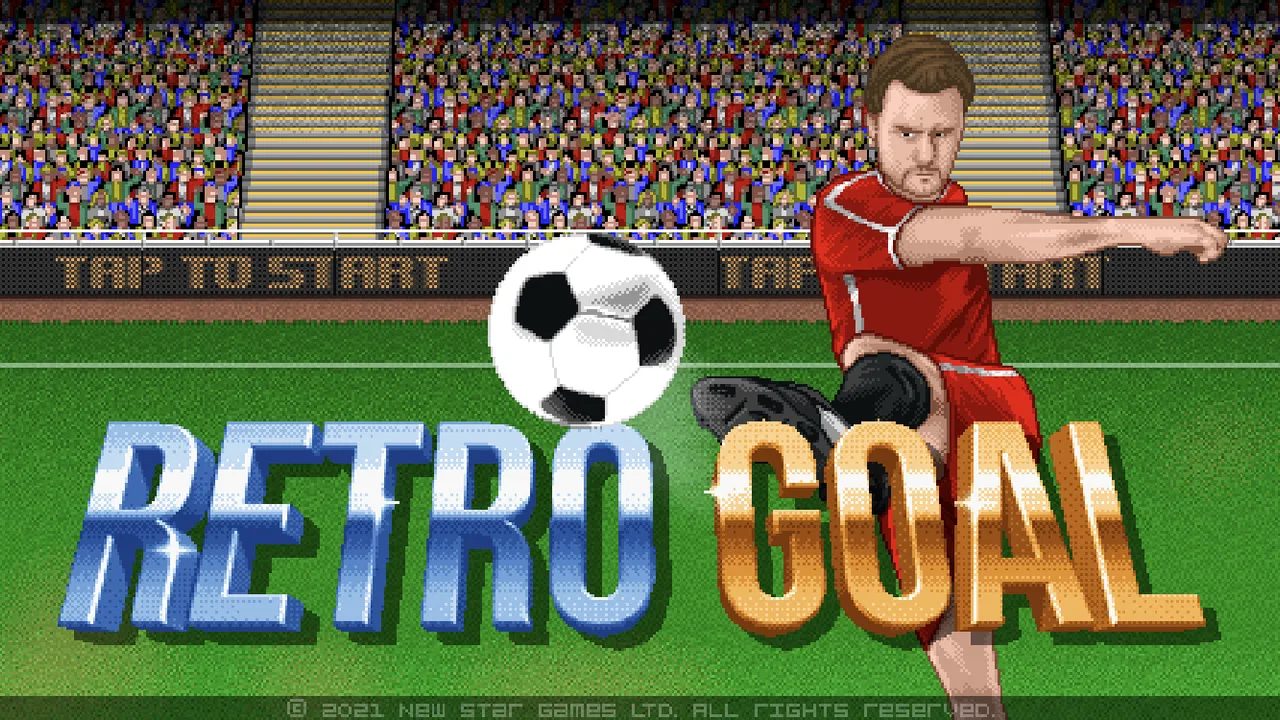
Retro Goal is the kind of football game I can open with no preparation, play a match in a few spare minutes, and put down before it starts feeling like homework. New Star Games Ltd keeps the presentation deliberately old-school, but the appeal is not only visual nostalgia. The important part is how quickly the game moves from a tap to a meaningful result: I choose an action, see whether it worked, collect a little progress, and usually feel tempted to try one more match.
That makes it a sports game rather than a full simulation. I would not choose it when I want the detailed controls, licensed presentation, or long tactical planning found in larger football titles. I would choose it when I want a compact retro football experience with a clear rhythm and very little friction. It is free to start, rated for Everyone, and available for devices running Android 5.0 or later. The current version is 1.1.2, while optional in-app purchases range from $2.49 to $10.99 per item.
Why the first touch matters in Retro Goal
The opening appeal is immediate. Instead of burying the player under menus and complicated instructions, the game gets me thinking about the next football action quickly. That matters on a phone, where a sports game has to explain itself through play rather than through a long tutorial. I can understand the basic idea by attempting a pass, a run, or a shot and then watching the result.
You May Also Like

 Google Keep - Notes and lists
Google Keep’s Quiet Growth Shows the Appeal of Simpler Notes
As mobile work gets busier, Google Keep keeps winning a simple contest: capture a thought quickly, find it later, and get on with the day.

 Blood Strike: 2.5 Anniversary
Blood Strike’s Loadouts Turn Every Drop Into a Tactical Gamble
A close look at Blood Strike’s custom loadouts: how fast access to signature weapons reshapes its battle royale rhythm, rewards preparation, and narrows the gap between fights.

 Pandora - Music & Podcasts
Pandora’s Music Is Easy to Start, but Harder to Recover
Pandora’s strength is its low-effort path from a seed to a station. Its weak spot is how much confidence it asks you to place in connection, setup, and quiet recovery.

 8 Ball Pool
 Is Built on Rivalries, Rematches, and Routine
A close look at the rivalries, rematches, shared routines, and unanswered safety questions that turn a quick pool match into a persistent mobile community.

 Samsung Music
’s Quiet Strength Is Playing What You Already Own
Its reach comes less from spectacle than from dependable access to a personal library. That simplicity is both the app’s strongest retention engine and its ceiling.

 AccuWeather: Weather Radar
AccuWeather Review: A Quick, Clear Forecast for Everyday Decisions
For everyday plans, the best forecast is the one you can understand quickly. AccuWeather makes rain timing, radar, and local conditions easy to act on, with a few trade-offs.
More From Our News Desk



The controls feel designed around short decisions. I am not trying to reproduce every movement of a real footballer. I am choosing when to move the ball, when to attack space, and when to take a chance. That limited control set is a strength for casual play because it leaves room for instinct. It also creates the game's main limitation: anyone looking for complete control over every player will find the experience intentionally simplified.
What I like most about the first action is that it has consequences without demanding a large time commitment. A misplaced attempt can change the shape of an attack, but it does not make me spend several minutes recovering from a single mistake. The game encourages experimentation. I can try a direct approach, learn from the outcome, and start the next attack with a slightly better idea of what the situation requires.
This is also where the retro style earns its place. The compact presentation keeps attention on the pitch and on the timing of each decision. It does not try to imitate a television broadcast or overwhelm the screen with visual detail. For me, that makes the game easier to read on a small display, especially when I am playing during a short break rather than sitting down for a serious console-style session.
Simple controls, meaningful choices
Simple does not mean automatic. The game still asks me to judge risk. A safe move may keep an attack alive, while a more ambitious attempt can create a scoring chance or end possession. That relationship between input and outcome is the reason the controls remain engaging after the novelty of the retro presentation fades.
I also find that the reduced control scheme makes the game approachable for people who do not normally play football games. A friend does not need to memorize a large button layout before joining the fun. The trade-off is that experienced simulation players may quickly notice the missing layers of control. There is less room for intricate formations, detailed player manipulation, or the kind of slow tactical construction that defines more serious alternatives.
My practical advice is to avoid treating every attack as a scoring attempt. The most satisfying moments often come from building a better opportunity rather than forcing the first available option. When I slow down just enough to read the situation, the game feels less like random tapping and more like a compact football puzzle.
The feedback rhythm: action, result, adjustment
Retro Goal works because the feedback arrives quickly. I perform an action, the match responds, and I immediately know whether my decision helped. A successful move gives me a reason to repeat that approach; a poor one tells me to change the next attempt. This rhythm is much more important than the number of menus or cosmetic details because it keeps the match moving.
The feedback is especially effective for short sessions. If I have only a few minutes before a train arrives, I do not need to invest that time in learning a complicated system. I can play, see the consequences, and leave with the feeling that I completed something. When I return later, the basic controls are easy to remember, so there is little restart anxiety.
That immediacy also makes mistakes feel useful. In a larger football simulation, a failed attack can be difficult to diagnose because many systems may have contributed to it. Here, the relationship is clearer. I can usually identify whether I rushed, chose an awkward direction, or took an unnecessary risk. The game does not turn every failure into a lengthy lesson, but it gives enough feedback for repeated attempts to feel purposeful.
There is a fine line between quick feedback and shallow feedback. Retro Goal stays on the enjoyable side for me because the context around each decision changes. A choice that works in one attack may not be the right choice in another. Still, players expecting deep match analysis should keep their expectations realistic. This is a streamlined football game, not a coaching laboratory.
How it compares with larger football games
Compared with the usual free football alternatives, the biggest difference is focus. Many modern sports games aim to keep players engaged through large rosters, layered progression, online competition, or highly detailed presentation. Retro Goal feels more concentrated. Its attraction is the match-to-match decision loop, not the promise of managing every part of a football universe.
That makes it a better fit for someone who dislikes the weight of a large sports game. I do not have to approach each session as a major project. On the other hand, a player who wants real-world teams, broadcast-style atmosphere, or deep multiplayer competition may be happier elsewhere. The retro identity is not a temporary skin over a simulation; it shapes what the game chooses to leave out.
I would also separate it from purely arcade football games. Those can be faster and more exaggerated, while this game gets much of its satisfaction from making a small number of decisions in sequence. It is approachable, but it still wants me to think about the next action. That middle ground is its strongest position.
The reward: why a good attack feels worth repeating
The reward in Retro Goal is not limited to the final score. A successful sequence feels good because I can trace it back to a decision I made moments earlier. When an attack works, the game confirms that my timing or choice was sensible. That creates a small but clear sense of mastery, even when the overall match remains quick and accessible.
This is where the game becomes more than a nostalgic football toy. The visual style may attract me initially, but the repeated reward comes from improving my judgment. I begin to recognize when an ambitious move is worth attempting and when patience is more useful. The game gives me enough room to develop that instinct without requiring a long study period.
Progression also gives the sessions a reason to connect. I am not simply playing isolated matches with no context. The broader experience encourages me to care about what happens next and to return after a disappointing result. I appreciate that structure because it turns a single successful moment into motivation for another attempt.
Still, the reward loop will not satisfy everyone equally. Players who need extensive customization, a large collection of unlockable content, or a highly social competitive layer may find the long-term motivation lighter than in bigger football games. The game is strongest when the act of playing is already enough of a reward. If I need constant new systems to remain interested, its compact design may eventually feel limited.
Using the reward loop without rushing
One useful way to play is to give each session a small personal goal. I might focus on making safer decisions, creating better chances, or avoiding rushed attacks. This makes the game feel more varied without pretending that it offers the depth of a full management simulator. The goal is not to invent complexity, but to notice the choices the game already places in front of me.
Another practical tip is to treat a failed match as information rather than a reason to immediately repeat the same approach. Because the game resets quickly, it is easy to fall into automatic retries. I get more from it when I change one part of my approach and see whether the result improves. That turns the next match into a small experiment instead of a duplicate attempt.
The free entry point is helpful here. I can try the core experience before deciding whether it belongs in my regular rotation. Optional purchases are present, so anyone who prefers a completely purchase-free environment should consider that before committing. I would not recommend spending simply to chase the feeling of progress; the game should be enjoyable through its football loop first.
Resetting after a match and choosing one more session
The reset is central to the game's personality. A match ends, the result becomes a piece of the larger journey, and I can begin again without a long recovery period. That structure suits mobile play better than a design that expects me to reserve a large block of uninterrupted time.
In an everyday scenario, I might open the game while waiting for an appointment. I play a match, make a few decisions, and reach a natural stopping point before I am called. If I have more time, the result gives me a reason to start again. If I do not, I can leave without feeling that I abandoned a complicated task halfway through. That balance is one of the clearest reasons I would recommend it to casual players.
The reset also softens failure. Losing is disappointing, but the next opportunity is close enough that I do not feel locked out of enjoyment. I can identify what went wrong, adjust my approach, and test the change. This is a better fit for players who enjoy learning through repetition than for those who want every match to unfold as a carefully controlled simulation.
There is a downside to the same convenience. Because another attempt is always easy to begin, sessions can stretch longer than planned. The game creates a gentle “one more match” pull: a near success makes me want another chance, while a poor result makes me want to correct it. If I am opening it during a short break, I need to decide in advance how many matches I actually have time for.
Who should play, and who should skip it
I think Retro Goal is best for players who enjoy football but do not want a demanding simulation. It is also a good choice for anyone drawn to retro presentation, quick matches, and controls that can be understood through practice. Younger players can approach it easily because it carries an Everyone content rating, while experienced players may enjoy it as a lighter alternative between larger games.
I would skip it if my priority is official realism, detailed tactical management, or a deep online ecosystem. I would also look elsewhere if I dislike repeating short matches to improve gradually. The design depends on repetition, and its charm comes from refining decisions rather than constantly discovering new mechanics.
Device compatibility is fairly broad because the game supports Android 5.0 and later, but the experience still depends on how comfortable the screen and controls feel on a particular phone or tablet. I prefer playing with enough display space to read the action clearly. The game is free, which makes trying it straightforward, though the optional purchase range means users should be aware that the complete spending experience can vary.
My verdict on the complete action loop
Retro Goal follows a clean cycle: I make a football decision, receive immediate feedback, enjoy the reward when the sequence works, reset after the match, and find a reason to begin again. That loop is the real product. The retro look supports it, but the game would not hold my attention if the actions did not lead to understandable consequences.
New Star Games Ltd has made a sports game with a clear identity. It does not compete by offering everything. Instead, it gives me a focused way to play football in short bursts, with enough decision-making to make improvement feel personal. The average rating of 4.0 from over 36 thousand ratings and more than a million installs suggest that the approach has found a substantial audience, though those figures matter less to me than whether the design fits my habits.
My recommendation is simple: try it if you want a free, approachable football game that respects short sessions and enjoys its retro character. Keep your expectations in check if you are coming from a detailed simulation. For me, the best sessions are the ones where I make one clever choice, see it pay off, and immediately understand why I want another match. Its greatest strength is the tight connection between action and feedback.
FAQs for Retro Goal
01What is Retro Goal, and what kind of gameplay does it offer?
Retro Goal is a fast-paced arcade football game that combines simple, responsive controls with management features. You play matches using passes, shots, tackles, and skill moves, while also managing aspects such as transfers, player development, finances, and team performance. Its pixel-art presentation and quick matches make it appealing to players who want an accessible football experience rather than a highly realistic simulation.
02Is Retro Goal free to download and play?
Retro Goal can generally be downloaded for free, but the available content and purchase model may vary depending on the Android or iOS version and your region. The free experience may provide access to selected features or an initial portion of the game, while additional content can require a one-time purchase or in-app payment. Check the store listing before downloading for current pricing and restrictions.
03Does Retro Goal require an internet connection?
Retro Goal is designed primarily as a single-player experience, and many of its core features can usually be enjoyed without a constant internet connection. This makes it suitable for short sessions while traveling or when mobile data is unavailable. However, an internet connection may be needed for downloading the game, verifying purchases, receiving updates, or using platform-related services.
04Is Retro Goal suitable for beginners who are not familiar with football games?
Yes. Retro Goal is relatively easy to learn because its controls are streamlined and matches focus on quick decisions rather than complicated button combinations. New players can begin by learning basic passing, shooting, and defensive actions, then gradually explore team management and tactical choices. The game still offers enough challenge for experienced players through progression, stronger opponents, and resource management.
05Does Retro Goal include team management and long-term progression?
Yes. Beyond playing matches, Retro Goal includes management elements that give the game a longer-term structure. Depending on the version and mode available, you may handle transfers, improve players, manage club resources, and build a stronger squad over time. These decisions can influence match performance, so success depends not only on your control during games but also on how effectively you develop the team.
Pros
- Simple controls make matches easy to pick up on mobile.
- Career mode offers satisfying team-building progression.
- Retro visuals and sound create a charming nostalgic atmosphere.
- Matches are short
- making the game suitable for quick sessions.
- Team management adds depth beyond the on-field action.
Cons
- Some gameplay situations can feel repetitive after extended play.
- The limited retro presentation may not appeal to everyone.
- Certain upgrades and content may require in-app purchases.
- AI behavior can occasionally feel predictable or inconsistent.
- The game offers less tactical detail than full football simulations.

Retro Goal
Gallery